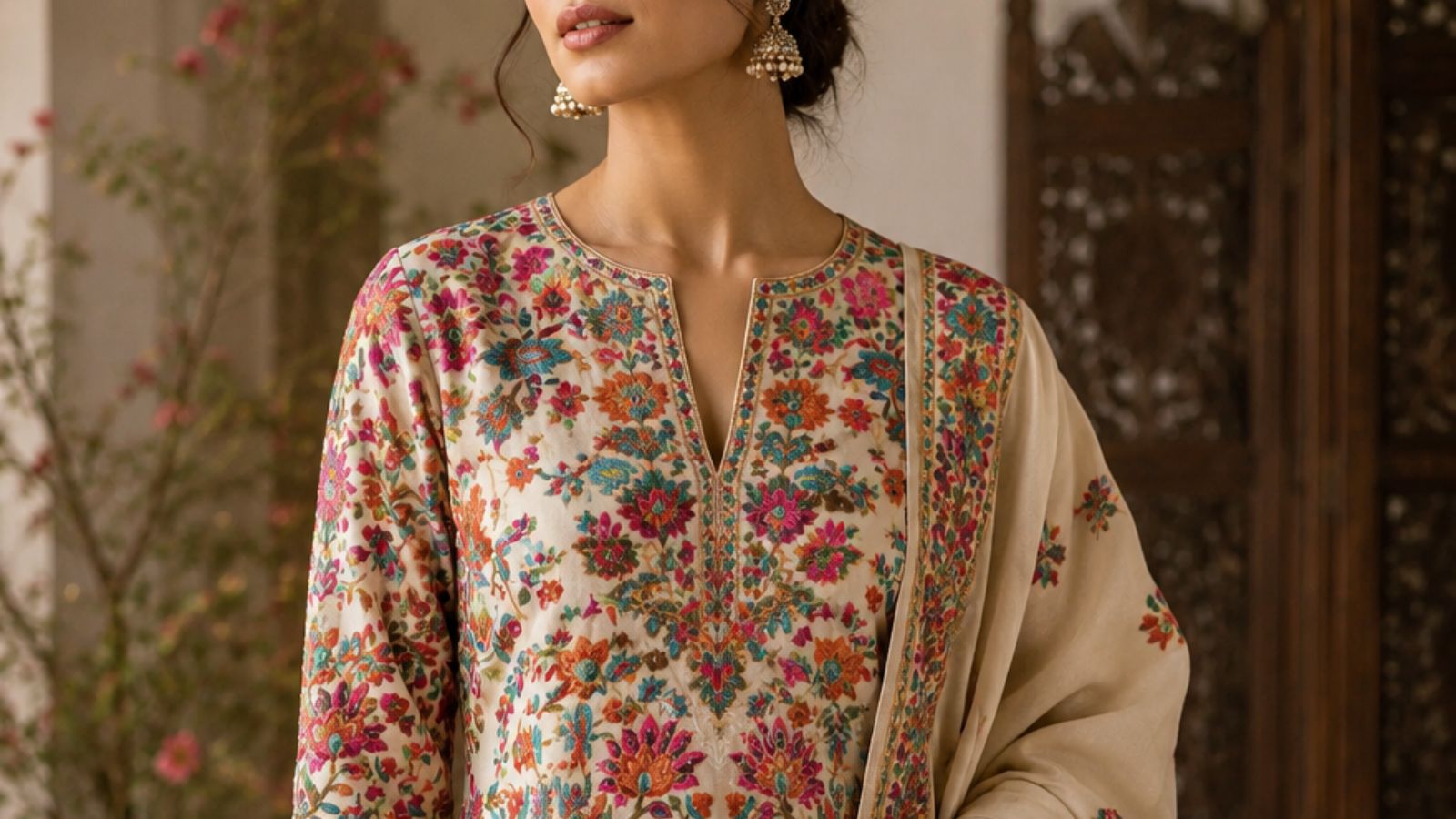


Kochi: In an era dominated by fast fashion and fleeting trends, Kashidakari embroidery continues to stand as a symbol of enduring craftsmanship, cultural identity and artistic excellence.
Originating primarily in the Kashmir Valley, Kashidakari — also known simply as Kashida — is one of India's most celebrated embroidery traditions. Introduced centuries ago by Persian Sufi saints and later patronised by Mughal and Afghan rulers, the craft transforms fabric into intricate works of art, drawing inspiration from the breathtaking landscapes of Kashmir.
At the heart of Kashidakari lies nature. Delicate Chinar leaves, lotus flowers, irises, cherry and almond blossoms, and the iconic paisley motif frequently adorn textiles, creating designs that mirror the valley's scenic beauty. The colour palette is equally evocative, reflecting Kashmir's changing seasons — fiery reds reminiscent of autumn foliage, vibrant greens and yellows inspired by spring, and serene blues echoing the region's lakes and skies.
The embroidery's distinctive aesthetic is achieved through a range of meticulous techniques. Sozni work, known for its exceptionally fine and uniform stitches, remains among the most prized forms of Kashidakari. The technique's celebrated do-rukha style showcases extraordinary craftsmanship, with embroidery executed so precisely that the design appears identical on both sides of the fabric.
Another popular style, Aari work, employs a hooked needle to create flowing chain stitches, lending garments a rich, textured appearance. Traditionally used on phirans, coats and home furnishings, Aari embroidery has increasingly found favour among contemporary designers seeking to blend heritage with modern silhouettes.
Also Read:

Papier-mâché embroidery, characterised by bold stitches and vivid contrasts, draws inspiration from the region's famed painted crafts, adding an ornate and vibrant dimension to textiles.
Timeless elegance
Today, Kashidakari embellishes everything from luxurious pashmina shawls and stoles to bridal ensembles, couture garments and everyday wear. Fashion designers across India and beyond continue to reinterpret the craft, ensuring its relevance in contemporary wardrobes while preserving its artisanal roots.
As conversations around sustainable and slow fashion gain momentum, Kashidakari serves as a reminder that true luxury lies in craftsmanship, heritage and the human hand. Every embroidered motif tells a story — of nature, tradition and generations of artisans who have kept this remarkable legacy alive.