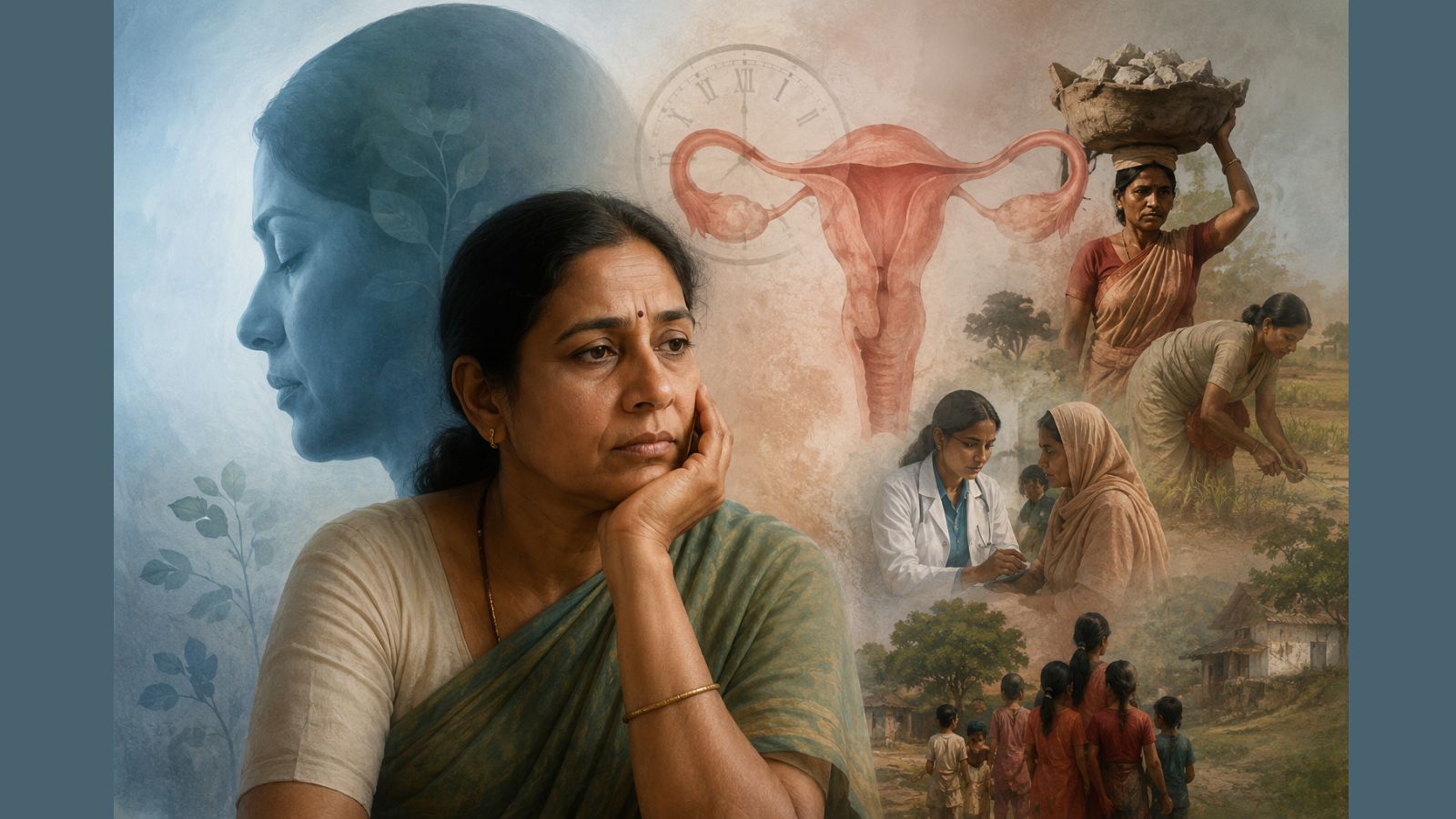


New Delhi: Early menopause, which can occur before the age of 45, affects one in 14 women aged 30 to 49 living in low and middle-income countries, according to a study published in the BMJ Global Health journal.
Researchers from the International Centre for Diarrhoeal Disease Research, Bangladesh, said the health consequences of early and premature menopause could place additional strain on healthcare systems, particularly in South Asia, East Asia and the Pacific, and sub-Saharan Africa.
Women usually experience menopause between the ages of 45 and 55. It is considered early if it occurs before the age of 45 and premature if it occurs before the age of 40.
Also Read:

The researchers found that the incidence was consistently higher in rural areas than in urban areas across the regions and countries studied. They added that education and delayed childbearing may significantly reduce the risk.
The study analysed pooled data from Demographic and Health Surveys (DHS) conducted since 2015, covering 716,648 women aged between 30 and 49 across 44 low and middle-income countries, including India, Indonesia, Gabon and Jordan, where women generally experience menopause earlier than those in high-income countries.
The dataset included nearly 365,000 women from India.
The researchers analysed data from all global regions except North and South America, for which comparable data were unavailable.
Early and premature menopause are associated with an increased risk of cardiovascular disease, osteoporosis, metabolic disorders, cognitive decline, depression and early death, making them a major public health concern. The conditions can also significantly affect a woman's quality of life.
The study cited earlier research published in The Lancet Obstetrics, Gynaecology & Women's Health in June, which found that South Asian women have a 34 per cent higher risk of premature menopause than European women, with half reaching menopause by the age of 47.4 years.
The researchers found that the overall prevalence of premature or early menopause was more than seven per cent, accounting for around 51,000 of the 716,648 women studied, which is considerably higher than previous global estimates. The highest prevalence was recorded among women aged 40 to 44 years, at 14 per cent.
Among the countries studied, Ethiopia recorded the highest prevalence at 12 per cent, followed by Indonesia at 11.5 per cent and Myanmar at more than 10 per cent. Jordan recorded the lowest prevalence at just over two per cent, while Gabon and Armenia each reported nearly three per cent.
Most participants lived in rural areas (62 per cent) and were aged between 30 and 34 years (29 per cent). Both the women and their husbands most commonly had secondary-level education (34 per cent and 17 per cent, respectively).
More than one-third of the women (38 per cent) were married before the age of 18, while around one in five (21 per cent) gave birth to their first child before turning 18. More than half (58 per cent) had three or more children.
"With populations in these countries ageing rapidly and women expected to spend an increasing proportion of their lives in the postmenopausal state, the prevalence represents a substantial and growing burden on health systems already constrained by competing priorities and limited resources," the authors wrote.
The researchers said the findings reflect inequalities in healthcare access, nutritional status, educational opportunities and occupational exposure. They noted that women in these regions are more likely to work in manual labour and face workplace hazards.
They also underscored the urgent need to integrate menopause care into reproductive health and non-communicable disease programmes.