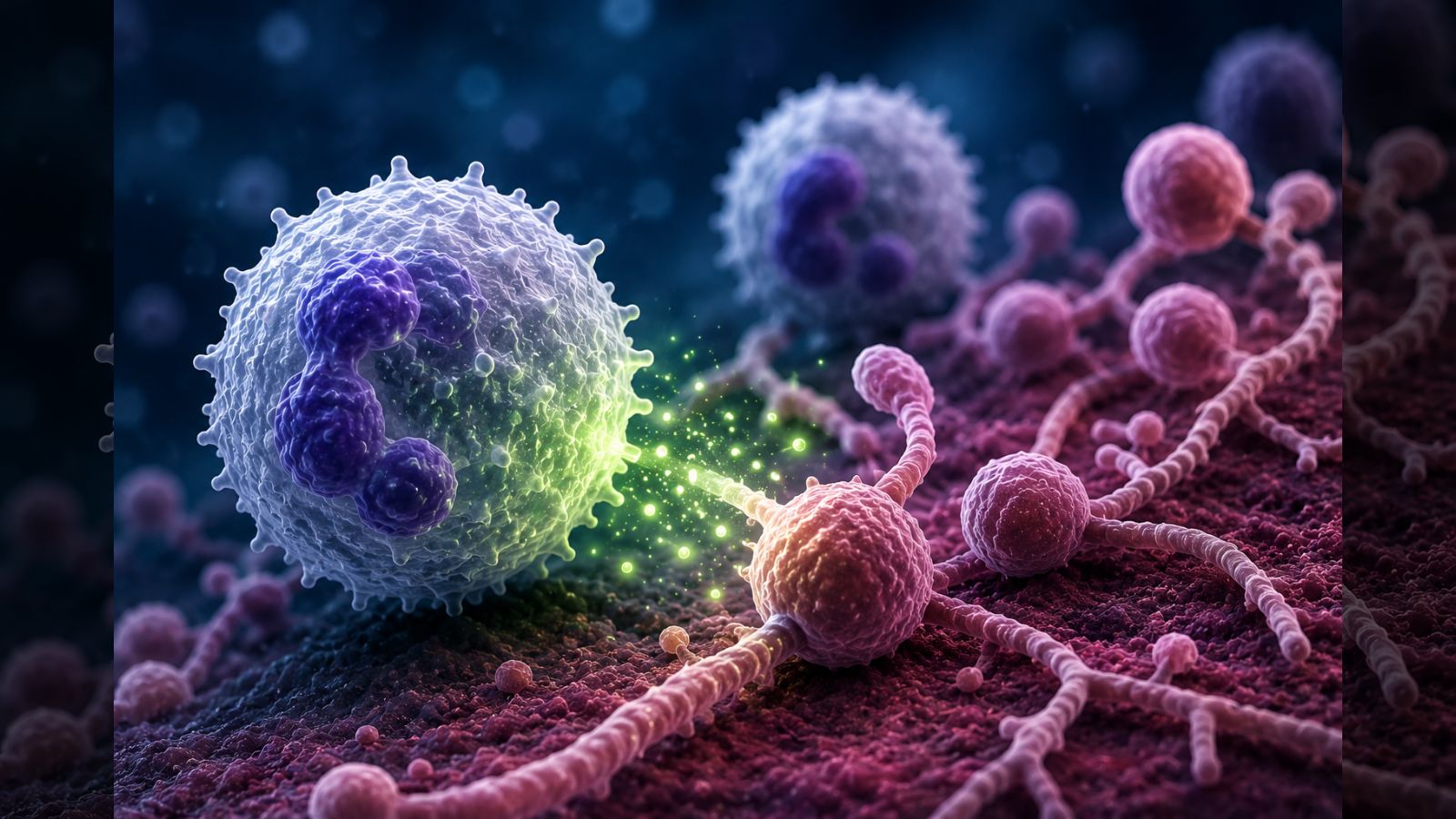


London: Researchers at the University of Sheffield have identified how the potentially deadly fungus Candida albicans evades the human immune system by disabling a crucial defence mechanism used by white blood cells, a discovery that could lead to new treatments for severe fungal infections.
The study, carried out by scientists at the University's Bateson Centre for Disease Mechanisms, found that the fungus suppresses the production of reactive nitrogen species (RNS) — toxic molecules produced by neutrophils, the body's first line of defence against invading microbes.
Using zebrafish models and human immune cells, the researchers showed that restoring this suppressed immune response significantly improved survival from infection, particularly when combined with existing antifungal drugs.
The researchers found that Candida albicans actively reduced RNS levels below their normal baseline, effectively weakening the body's natural ability to eliminate the fungus during infection.
A similar immune-suppressing mechanism was also observed in Candida auris, an emerging multidrug-resistant fungal pathogen. Both Candida albicans and Candida auris have been designated as critical priority fungal pathogens by the World Health Organization because of increasing antifungal resistance and the limited availability of effective treatments.
The study also found that fungal strains capable of suppressing neutrophil activity more effectively caused more severe infections, indicating that immune suppression is a major factor contributing to the fungus's virulence.
The findings highlight the potential of host-directed therapies, which aim to strengthen the patient's immune response instead of attacking the fungus directly. Researchers believe such therapies could become increasingly important as antifungal resistance continues to rise globally.
Dr Philip Elks, Senior Lecturer at the University of Sheffield's School of Medicine and Population Health and Co-Director of the Bateson Centre for Disease Mechanisms, said fungal infections remain a major threat to people with weakened immune systems and that new treatment approaches are urgently needed.
He said the findings suggest that enhancing the body's immune response could help vulnerable patients better fight fungal infections when used alongside conventional antifungal medicines.
An estimated 40 to 60 per cent of healthy people carry Candida albicans naturally without experiencing illness. However, in people with weakened immune systems, the fungus can enter the bloodstream and cause invasive candidiasis, a serious infection with mortality rates approaching 50 per cent.
The research team will now investigate how the fungus suppresses neutrophil function and whether therapies targeting reactive nitrogen species can eventually be developed for clinical use.